
1929 Ford Model A
 Jason Allen
 Vehicle story
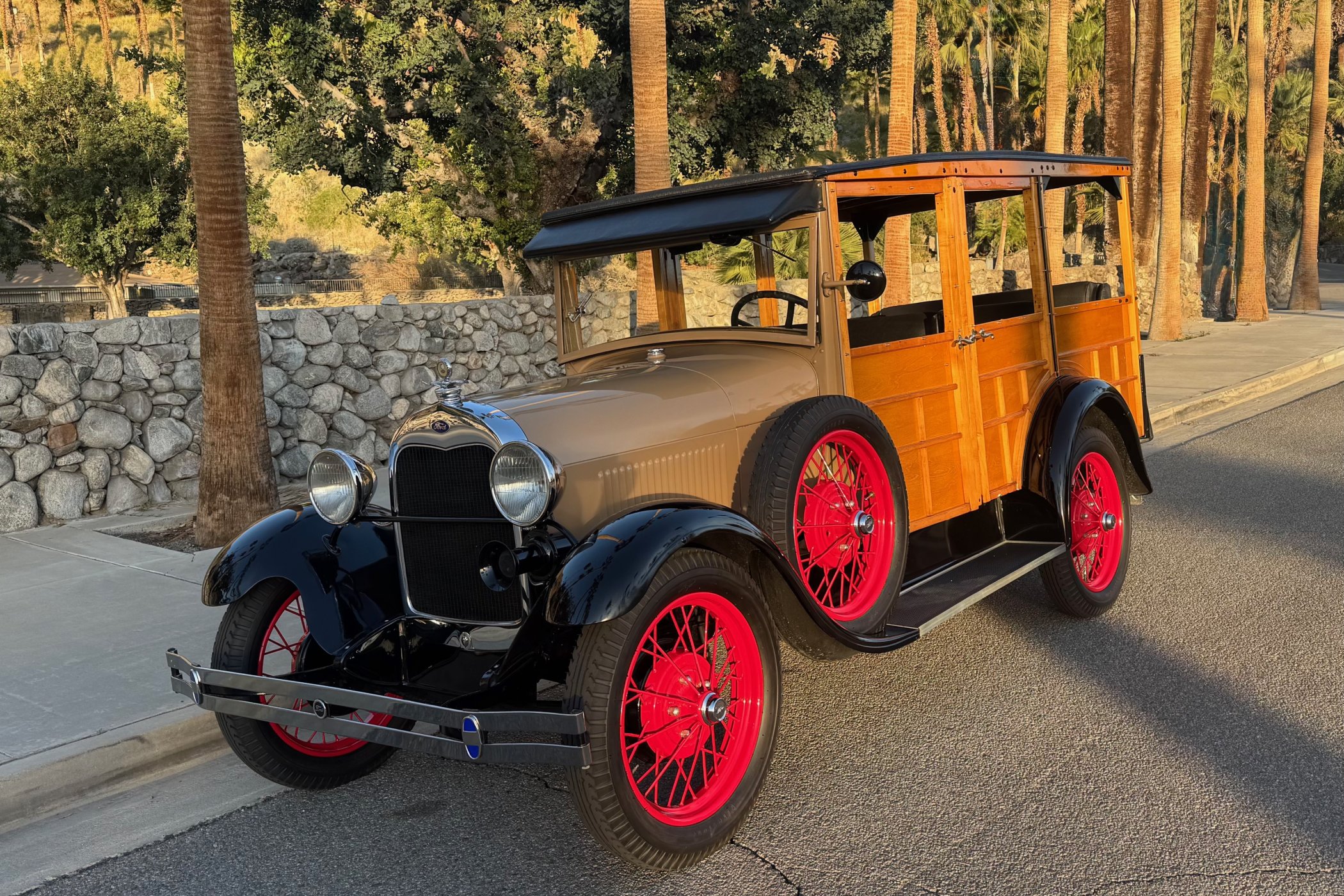
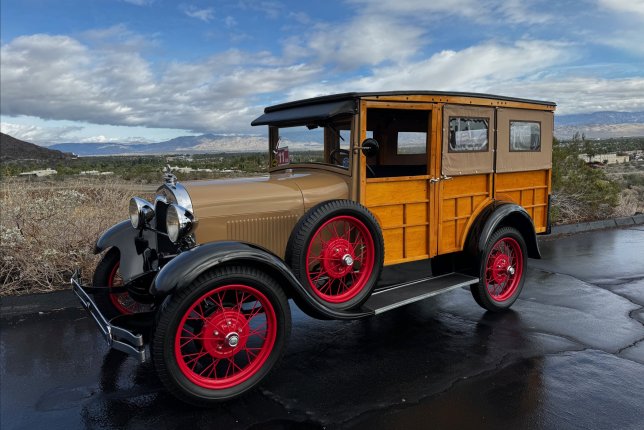
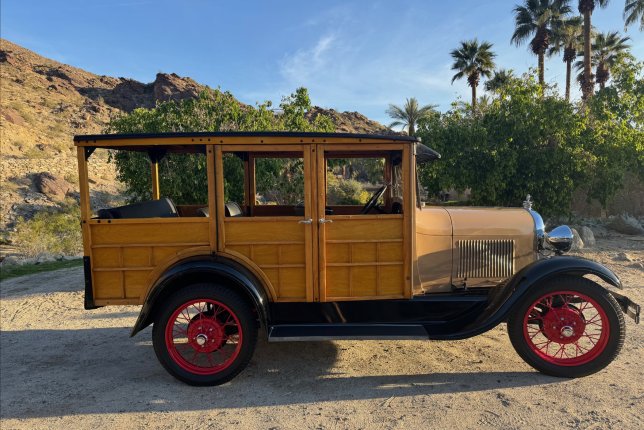
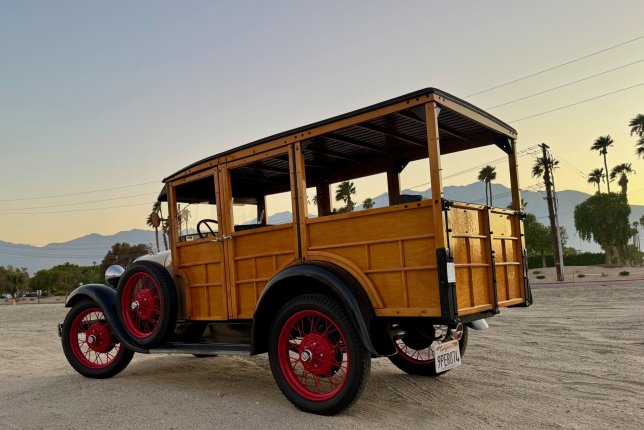
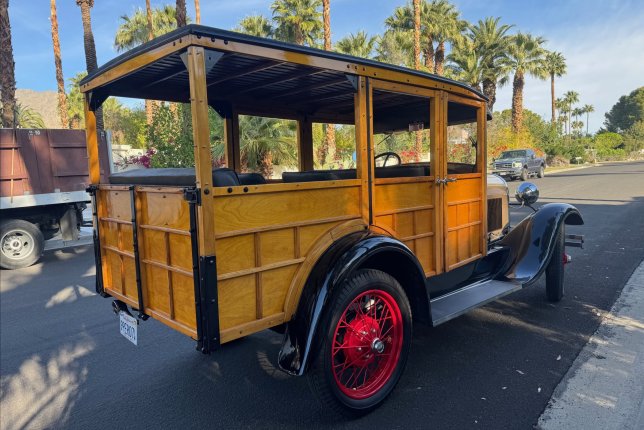
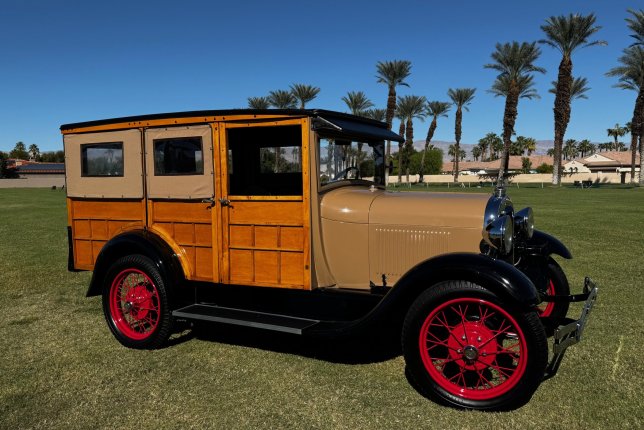
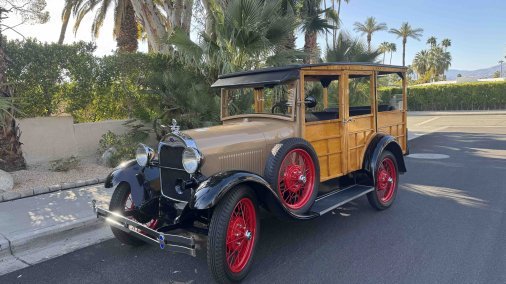
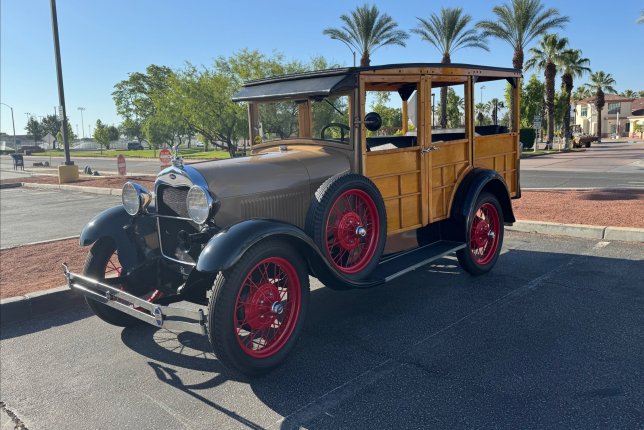
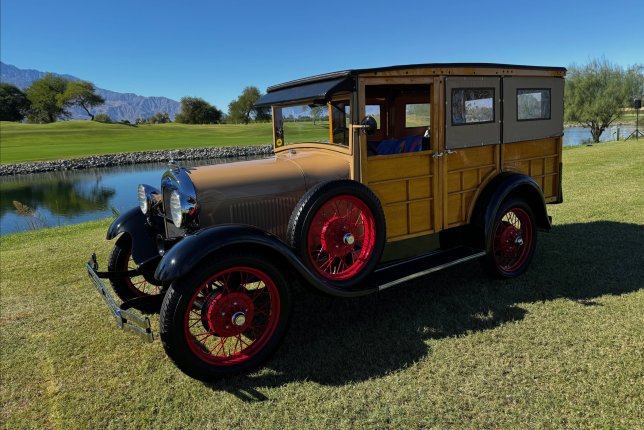
1929 FORD MODEL A STATION WAGON 150B
Ford Model A cars and trucks were introduced in 1927 to great fanfare and were produced until 1931. The body styles included hard top and soft top trucks; coupes and roadsters with a rumble seat or an optional trunk; and two-door and four-door sedans. In 1929, the line expanded to include a station wagon.
The Ford Model A Station Wagon was the first production year of a passenger vehicle exceeding six occupants for private use. Car companies, including Ford, built and sold buses, referred to as “coaches”, to municipalities, schools, and industry. Then, as now, coaches were large, heavy, expensive, and required more skill to operate than the average automobile.
It’s said that Edsel Ford built a so-called “depot hack” much like this car for use at his estate, Gaukler Pointe in Grosse Pointe, Michigan. Depot hacks were custom-built, multipassenger wagon-type wood bodies placed on the chassis of another vehicle. (Ford even sold Model T and Model A chassis without bodies through its dealerships for this very purpose.) Ford capitalized on the idea with the 150A. By creating a mass production station wagon, he made this useful vehicle affordable to those without the skills or resources to create a depot hack.
In some ways, the 150A launched America’s love affair with wood-bodied automobiles that lasted past the Second World War. High maintenance requirements eventually led "woodies" to become symbols of upper-middle-class wealth. Vehicle names like “Country Squire” and “Town and Country” evoked an image of those with a townhouse, a country house, and a man to varnish the car annually. Plus, in post-war America, wood-bodied cars commanded a significant premium when compared to all-steel counterparts, thus contributing to their upper-class status.
Meanwhile, second-hand woodies were often sold off cheaply because of the necessary body maintenance. Surfers in California recognized the opportunity, and in the 1960s, The Beach Boys captured the mystique of them in their iconic songs "Surfin' Safari" and "Surf City."
This enchantment continued unabated well into the 1990s with faux woodgrain paneling, but even that eventually ended in the early 2000s with the few cars (2002 Chrysler PT Cruiser), vans, and trucks (2002 Lincoln Blackwood) sporting the look.
Much of this car’s body has survived, as noted by the blackened finger joints and pitted corners on the door panels. Restored about 12 years ago, the car has changed hands at least three times since then. Under the current stewardship, the car’s distributor and carburetor have been replaced with period-correct rebuilt units. The 6V generator has been replaced with a modern 6V alternator designed specifically for a Ford Model A. This modification increases battery recharging and reliability, in addition to brighter lamps. The rear steel brake drums have been replaced with cast-iron drums. This was a common upgrade within a few years of the Model A being introduced.
The car runs well and photographs beautifully. It is available chauffeured and for events with a driver provided.
It seats five, six in a pinch, with three slim passengers along the rear bench seat. The car is tall, so there is plenty of headroom. Leg room, on the other hand, is spare.
CHAUFFEURED OPTIONS
For those looking for an adventure, Cabot's Pueblo Museum is about 13 miles from downtown Palm Springs; that's roughly a 30-minute drive without traffic in a Model A going a maximum speed of 45 miles per hour. We'll wind our way through Old Las Palmas to Indian Canyon or Gene Autry, depending on traffic and road conditions, and then drive past the legendary windmills in the San Gorgonio Pass. Weather permitting, the journey there, including loading and unloading, is accomplished with the minimum chauffeured booking time. A Lyft or Uber could bring you back to Palm Springs after you visit the museum. You could also book an extended chauffeured session with a return trip to the pick-up location in Palm Springs. NOTE: Before booking this chauffeured adventure, check the Cabot's website for hours and guided tour availability. https://cabotsmuseum.org/
An alternative chauffeured activity is an architectural tour of Palm Springs. Unlike the typical trot around town to see the noted midcentury highlights, this tour is designed to walk you through the progression of architecture from roughly the 1920s through the 2010s. This tour is between two and three hours, depending upon traffic and questions. One refueling stop may be necessary; during this respite, all passengers must disembark from the vehicle. The clock stops and only restarts when the tour resumes.
Specifications:
Width: 66 inches Height: 74.25 inches Wheel base: 103.5 inches Length: 156 inches
This car is affectionally named The Bishop and can be found on Instagram @thebishopinpalmsprings
Engine
The engine number is A2211710. This correlates with a build date of August 1929. The engine has been rebuilt based on appearance, performance, and the restoration history of the vehicle.
Wheels and tires
21-inch wire spoke factory issue painted in vermilion red
Brakes
Four-wheel, factory-issue mechanical drum brakes with a period performance upgrade to cast iron drums on the rear wheels
Transmission
3 forward; 1 reverse manual transmission that requires the driver to "double-clutch" when shifting between gears.
Policies
Pick-up / Return location
Pick-up instructions
The vehicle is available for events outside the Coachella Valley by special arrangement and with additional transportation charges at prevailing rates.